%20(4).png)


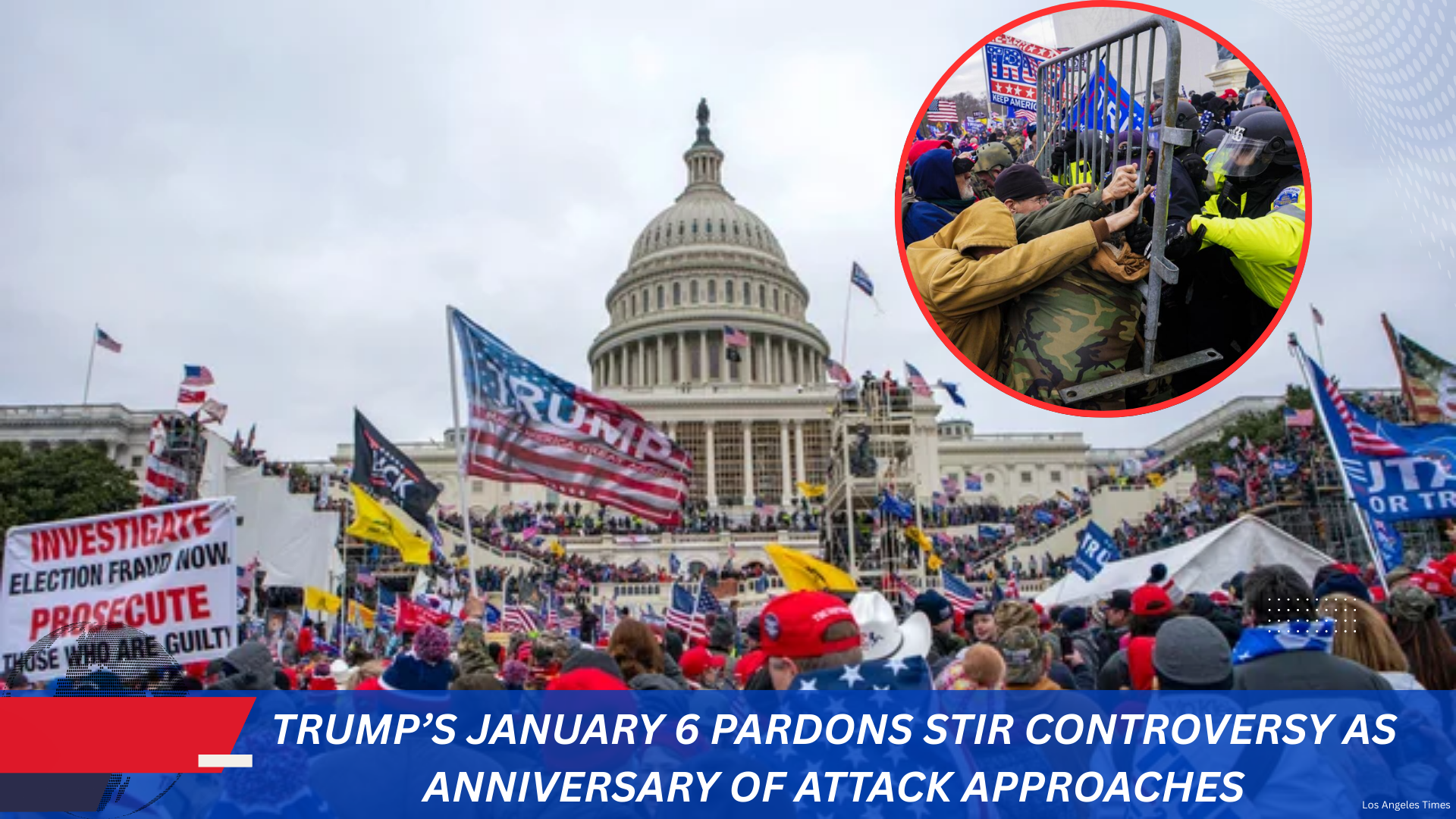


As the five-year mark of the January 6, 2021, attack on the U.S. Capitol approaches, President Trump’s mass pardons of those involved continue to reverberate across political, legal, and civic spheres. In one of his first actions after returning to the presidency, Trump granted clemency to roughly 1,500 individuals charged or convicted in connection with the assault — including participants convicted of assaulting law enforcement officers, vandalizing federal property, and attempting to disrupt the certification of the 2020 election results. These pardons effectively halted hundreds of ongoing prosecutions and brought a sudden end to cases that had consumed years of federal investigation.
Trump has defended the sweeping use of his clemency power, arguing that many participants had already served lengthy sentences or faced excessive penalties. He framed the pardons as a campaign promise fulfilled and as a measure of fairness, asserting that some individuals were treated more harshly than warranted for their actions. Supporters argue that the criminal justice system disproportionately penalized these participants, particularly lower-level actors who did not engage in violence but were swept up in a massive federal investigation.
The scale of the pardons, however, is without precedent for cases involving domestic political violence, and critics have reacted strongly. Law enforcement officers who defended the Capitol that day have been among the most vocal opponents, describing the pardons as an affront to the sacrifices and risks they undertook. Many of these officers sustained injuries, some life-altering, while protecting Congress and ensuring the continuity of government. To them, the clemency sends a message that attacks on public officials and democratic institutions can go unpunished if politically convenient.
Members of Congress have also weighed in, framing the debate around both legal and constitutional concerns. House Democratic leaders have condemned the pardons as undermining the rule of law, highlighting that the prosecutions were the product of the largest federal investigation in U.S. history. They emphasize that accountability for the attack is not a partisan issue but a matter of protecting democratic processes. Some Republican lawmakers have defended Trump’s actions as consistent with the president’s constitutional authority to issue pardons, while others expressed discomfort, noting that executive clemency in this context could erode public trust in impartial justice and create a perception of political favoritism.
Legal scholars are divided as well. Many emphasize that while the president’s clemency powers are broad under the Constitution, the use of those powers to pardon individuals involved in attempts to overturn an election raises questions about precedent. Could a future president justify similar pardons for politically motivated violence? Does mass clemency in such cases weaken deterrence and encourage future threats to democratic governance? Observers note that the pardons, while legally permissible, carry significant symbolic weight, potentially shaping the political and legal landscape for years.
The impact on public perception has been profound. Supporters of Trump often characterize the pardons as correcting perceived injustices and defending loyal constituents from what they see as prosecutorial overreach. Critics, however, argue that the decision normalizes political violence, signals that serious misconduct can be absolved through partisan alignment, and undermines the principle that no one is above the law. Polling data indicate deep divides along partisan lines, with reactions largely reflecting preexisting political allegiances rather than reassessment of the events themselves.
International observers have taken note of the pardons as well. The United States has long positioned itself as a model for rule-of-law governance and adherence to democratic principles. Legal experts warn that the mass clemency risks weakening the credibility of U.S. institutions abroad, particularly when foreign governments and international organizations monitor the application of justice in politically sensitive cases. The perception that political loyalty can override accountability may affect diplomatic relations and the global reputation of U.S. democratic norms.
The practical consequences of the pardons are also complex. In some instances, individuals who were pardoned have already faced new legal challenges or have engaged in rhetoric celebrating the attack, reinforcing concerns that the clemency may embolden further politically motivated misconduct. At the same time, the legal system must grapple with ongoing questions about the limits of presidential authority and the ability of courts and Congress to respond when mass clemency intersects with acts that threatened the functioning of government.
The timing of the pardons, close to the fifth anniversary of the Capitol attack, adds another layer of tension. Democrats are using the occasion to schedule hearings, public events, and educational initiatives aimed at reaffirming the historical record of January 6 and countering narratives that minimize or justify the violence. Trump and his allies, meanwhile, leverage the pardons to argue that the event has been mischaracterized, presenting participants as victims of partisan prosecution rather than as individuals responsible for serious criminal acts.
Civil society groups, including organizations dedicated to protecting democratic institutions, have voiced concern that the pardons could undermine broader societal trust. By absolving those who attempted to disrupt a peaceful transfer of power, critics argue, the administration risks creating a precedent in which challenges to elections, threats to lawmakers, and violent intimidation are treated inconsistently, depending on political alignment. This inconsistency, they warn, may have long-term implications for political engagement and civic stability.
The pardons also intersect with ongoing legal and political battles related to election integrity, domestic extremism, and the limits of executive power. Congressional committees are expected to hold hearings and issue reports analyzing the scope and consequences of the clemency actions. These proceedings will likely focus on constitutional questions, adherence to law, and lessons learned for safeguarding democratic processes in the future.
Ultimately, Trump’s pardons of January 6 participants serve as a focal point for broader debates about justice, accountability, and the health of American democracy. They demonstrate the wide latitude of presidential authority but also underscore the tensions that arise when legal power intersects with political loyalty and public perception. As the nation observes the fifth anniversary of the Capitol attack, these clemency decisions remain a contentious issue, shaping discourse not only about past events but also about the standards and expectations that govern the exercise of power in the United States.