%20(4).png)


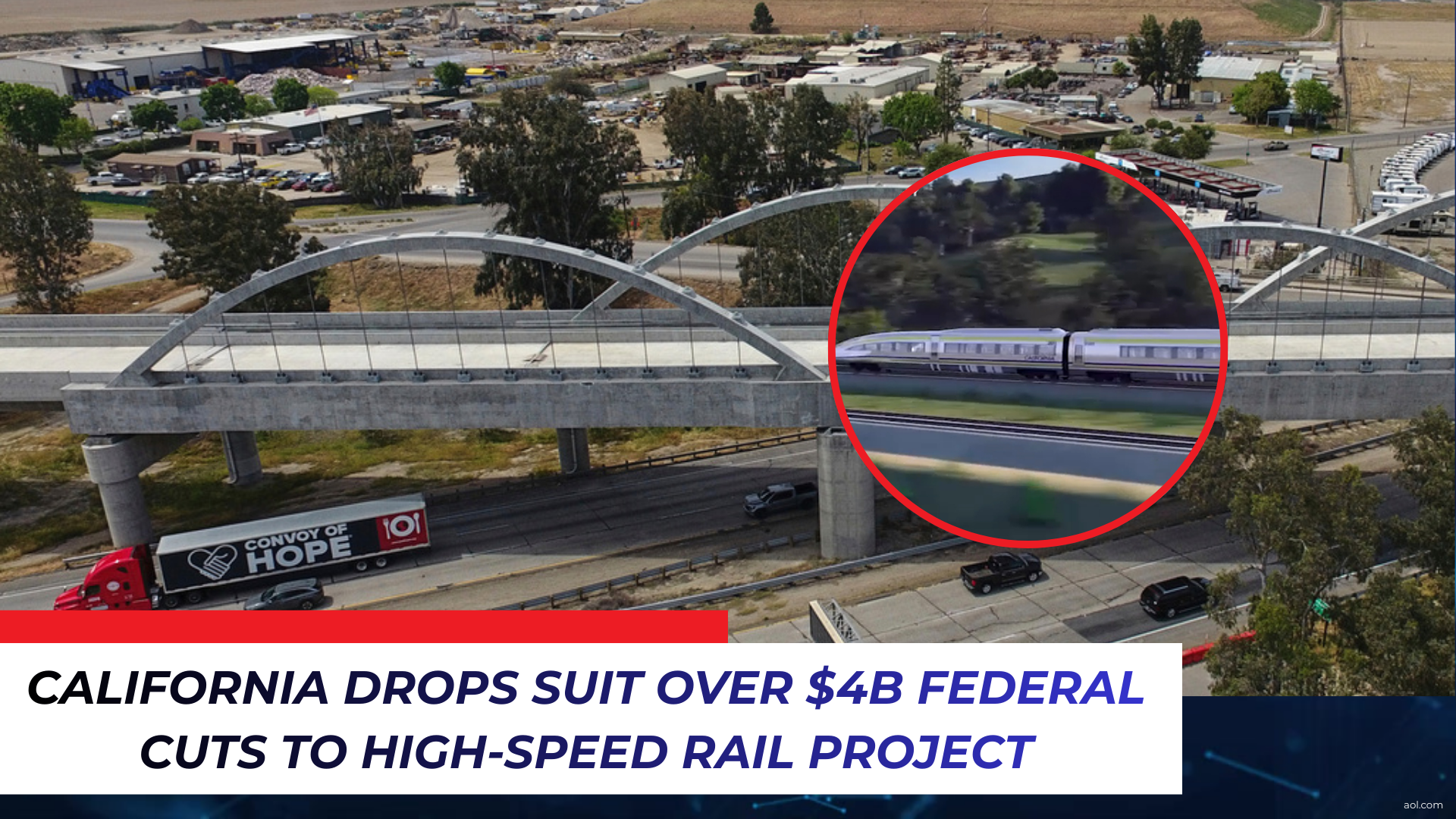


California has decided to drop its lawsuit challenging federal funding cuts to the state’s high-speed rail project, a move that marks a significant shift in the ongoing saga of one of the nation’s most ambitious infrastructure undertakings. The lawsuit, filed earlier this year, sought to restore roughly four billion dollars in federal funding that had been withheld, arguing that the cuts jeopardized the completion and efficiency of the rail system designed to connect major urban centers across the state.
The decision to drop the suit comes after months of negotiations and reassessment of the project’s financial strategy, reflecting both the practical realities of managing a complex infrastructure program and the evolving political landscape surrounding federal support for large-scale transportation initiatives. Officials within the California High-Speed Rail Authority indicated that while the loss of federal funds represents a challenge, the state is confident in its ability to adjust budgets and continue construction without relying solely on the previously allocated money.
The high-speed rail project, envisioned to link San Francisco and Los Angeles with faster, cleaner, and more efficient transportation, has faced numerous obstacles since its inception, including cost overruns, delays, political opposition, and debates over environmental impacts. The federal cuts were announced amid concerns in Washington over escalating expenses and the pace of construction, prompting California to pursue legal action to ensure the original funding commitment would be honored. The lawsuit sought to compel the federal government to release funds that were part of long-standing agreements, asserting that withholding the money violated prior contractual and statutory obligations.
Dropping the suit does not signal the end of controversy surrounding the rail project but rather a strategic pivot toward alternative solutions. State officials are now emphasizing the importance of securing additional state funding, exploring public-private partnerships, and reprioritizing segments of the rail network that offer the highest potential for early operational success. By shifting focus away from federal litigation, California aims to demonstrate progress, maintain momentum, and reassure stakeholders that the project remains viable despite financial setbacks.
Analysts note that the decision reflects a pragmatic recognition of the complexities involved in large infrastructure programs. Lawsuits against federal agencies can be protracted, expensive, and uncertain in outcome, particularly when funding decisions involve broad discretionary authority. By discontinuing legal action, California can redirect resources and attention to on-the-ground construction efforts, project management, and community engagement, which are critical to meeting long-term objectives.
The high-speed rail project is designed to transform transportation in California, offering an alternative to congested highways and air travel while promoting environmental sustainability. Proponents argue that completing the rail network will create thousands of jobs, reduce carbon emissions, and foster economic growth by improving connectivity between key economic hubs. Critics, however, have repeatedly raised concerns about escalating costs, delays, and the challenges of integrating the rail system into existing transportation infrastructure. The loss of federal funds underscores these challenges, but state leaders insist that the project’s long-term benefits justify continued investment.
Federal officials have emphasized that their decision to cut funding was based on an assessment of progress and fiscal responsibility rather than opposition to high-speed rail as a concept. Washington has maintained that oversight and accountability are essential in large federally supported infrastructure projects and that states must demonstrate efficiency, cost control, and measurable outcomes to receive full funding. The dialogue between federal and state authorities reflects broader tensions in infrastructure policy, where ambitious projects must navigate complex layers of governance, regulatory requirements, and competing priorities.
The California High-Speed Rail Authority has signaled that despite the loss of $4 billion in federal support, construction continues in multiple segments of the rail corridor, including the Central Valley, where significant progress has already been made. The authority is also seeking additional state funding allocations and exploring new revenue streams to bridge financial gaps. Public-private partnerships are being evaluated as a means to accelerate construction, leverage private investment, and ensure long-term operational sustainability.
Community impact remains a central concern for officials, who are actively working to minimize disruption to local populations while advancing construction. The rail project requires careful planning to integrate with local transportation networks, manage environmental considerations, and address concerns from property owners along the route. Public engagement and transparency are critical components of maintaining trust and support for a project of this scale and complexity.
Dropping the federal lawsuit allows California to focus on practical strategies for moving the high-speed rail project forward. By emphasizing state-level solutions, partnerships, and careful project management, officials hope to maintain confidence among stakeholders, including commuters, businesses, environmental groups, and local communities. The decision may also signal a more collaborative approach with federal authorities in the future, where negotiation and planning replace litigation as the primary tool for addressing funding disputes.
The state remains committed to completing the rail system, albeit on a timeline and budget that require adaptation to current financial realities. As construction continues, the project will remain a focal point of public attention, policy discussion, and economic planning in California, serving as a test case for large-scale infrastructure initiatives across the United States. The future of high-speed rail in California may depend less on litigation and more on creative financing, disciplined execution, and sustained public support.
.png)

%20(12).png)