%20(4).png)


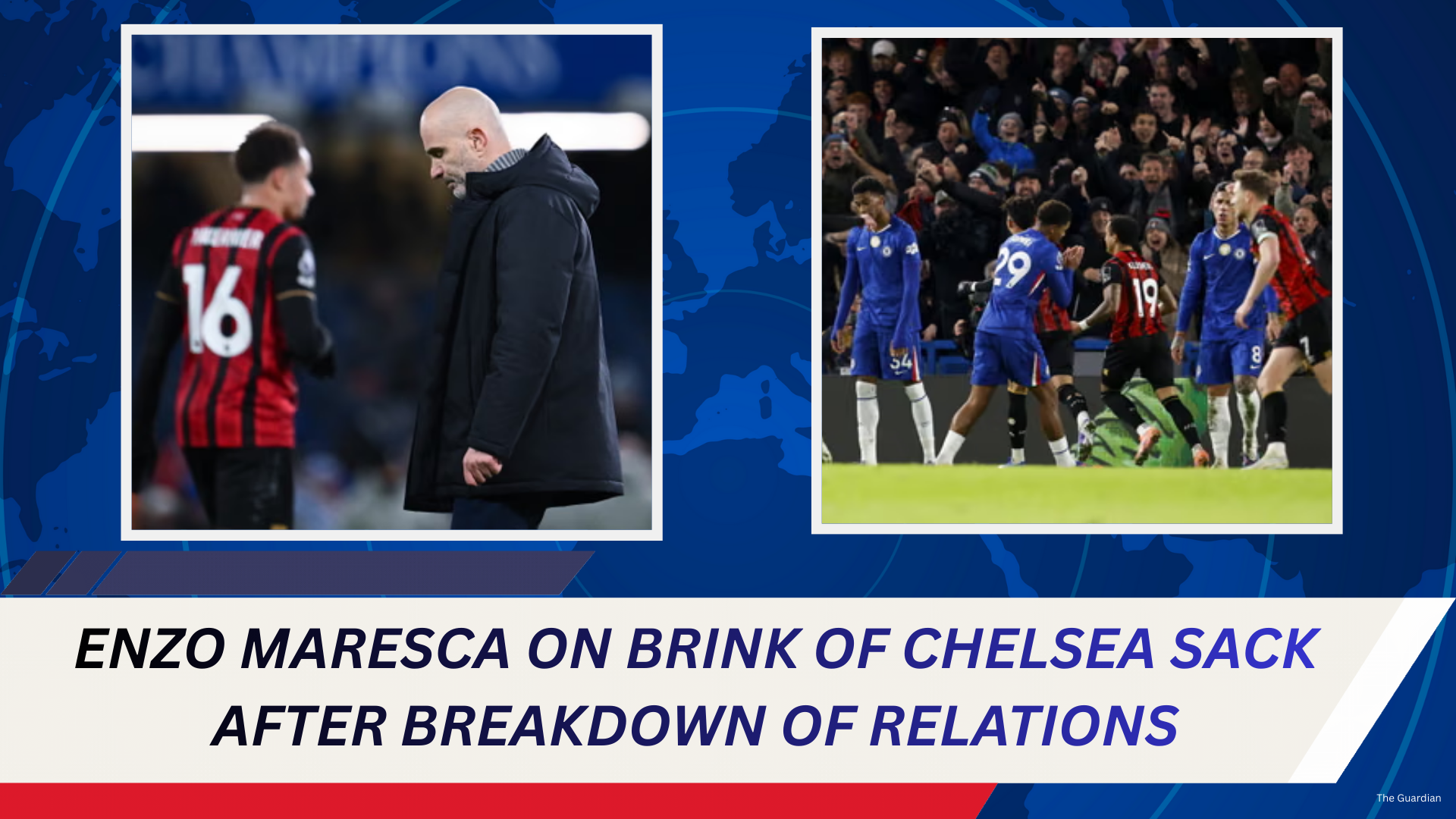


Chelsea Football Club is reportedly facing another managerial upheaval as Enzo Maresca stands on the brink of being sacked. Sources indicate that a breakdown in relations between Maresca and the club’s leadership has escalated tensions, leaving the Italian manager’s position increasingly untenable. The situation marks yet another chapter in Chelsea’s ongoing instability since the club underwent a high-profile ownership change and a period of intense restructuring.
Maresca, who took over as Chelsea manager earlier this season, was initially seen as a promising appointment. Known for his tactical acumen and previous coaching roles across Europe, he was expected to bring a fresh approach to a squad struggling for consistency. However, reports suggest that internal disagreements over team strategy, player management, and long-term planning have led to friction with senior club executives.
The breakdown of relations between Maresca and Chelsea’s leadership reportedly centers on differing visions for the club. While Maresca has emphasized building a cohesive team around emerging talent and implementing a structured tactical system, executives are said to be frustrated with results on the pitch and communication issues behind the scenes. The disconnect has created an atmosphere of tension that is believed to be unsustainable.
Chelsea fans, meanwhile, have been closely following developments with a mix of concern and frustration. The club has endured a series of managerial changes over recent years, which has affected both team performance and fan confidence. Supporters had initially hoped Maresca’s appointment would signal a period of stability and strategic planning, but the current situation threatens to undermine those expectations.
On the field, Chelsea has shown flashes of potential under Maresca’s guidance, but inconsistency in results has been a recurring problem. While some matches demonstrated disciplined defensive organization and creative attacking play, others revealed tactical vulnerabilities and a lack of cohesion. Observers suggest that these performance swings may have exacerbated disagreements with club leadership, creating pressure to consider a managerial change.
The potential sacking of Maresca also reflects the broader challenges facing Chelsea since the club’s ownership transition. With new leadership aiming to assert control and implement a vision for long-term success, managerial appointments are being scrutinized intensely. The pressure to achieve immediate results while balancing player development and strategic objectives has made the role particularly demanding.
Chelsea executives are reportedly exploring replacement options should Maresca be dismissed. Speculation has centered on both experienced managers and emerging coaching talents who might bring stability and align with the club’s ambitions. While no official decisions have been made, sources suggest that any transition will be handled swiftly to minimize disruption ahead of upcoming fixtures.
The situation has drawn attention from pundits and analysts, who emphasize that Chelsea’s instability at the managerial level could have long-term consequences. Frequent changes in leadership can disrupt team chemistry, affect player morale, and hinder strategic continuity. Experts note that resolving the current tensions will require careful consideration from both the club and any incoming manager.
Players themselves are believed to be caught in the middle of the disagreement. Reports indicate that while some squad members have supported Maresca’s methods and vision, others have grown frustrated with the lack of clarity and consistency in communication. Maintaining morale during such transitions is crucial for performance, particularly in a competitive league where every point is critical.
Maresca’s near-sacking comes amid increasing media scrutiny, with each development being analyzed extensively by sports journalists, social media commentators, and Chelsea supporters worldwide. The club’s handling of the situation will likely influence public perception and could impact future managerial recruitment, as prospective coaches consider both the challenges and expectations at Stamford Bridge.
Despite the turbulence, some observers argue that Chelsea retains the resources, talent, and infrastructure to stabilize quickly. Strong executive decision-making, clear communication with the squad, and a well-considered appointment for the managerial position could help the club navigate this period of uncertainty. However, missteps during the transition could exacerbate existing tensions and affect both domestic and European campaigns.
The story of Maresca’s tenure and potential dismissal highlights the high-pressure environment of top-tier football management, where results, relationships, and strategic alignment are all under intense scrutiny. Chelsea’s leadership faces the delicate task of balancing short-term performance needs with long-term planning while maintaining trust and cohesion within the squad.
As the situation develops, Chelsea supporters will be watching closely to see how the club addresses the apparent breakdown in relations with Maresca. Whether through reconciliation or a managerial change, the outcome will have significant implications for the team’s trajectory, morale, and standing in domestic and European competitions.
Ultimately, the potential departure of Enzo Maresca underscores the challenges of modern football management, where tactical expertise, leadership, and alignment with club vision must converge to achieve sustainable success. Chelsea’s next steps will be critical in determining whether the club can regain stability and continue to compete at the highest level.
.png)
.png)
.png)
.png)