%20(4).png)


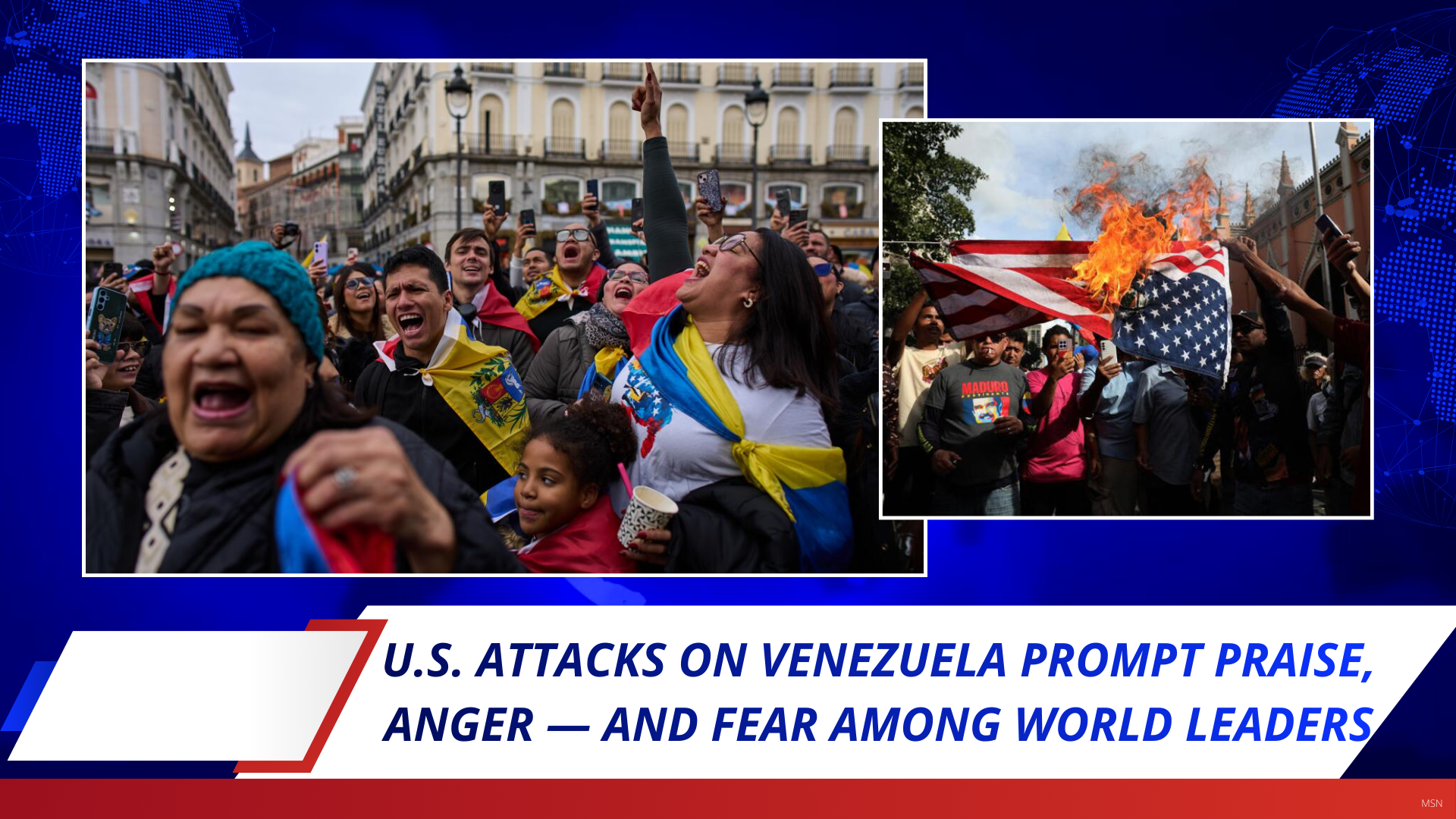


The U.S. military strikes on Venezuela and the subsequent capture of President Nicolás Maduro have produced sharply divided reactions across the globe, drawing praise from some governments, condemnation from others, and quiet anxiety among many leaders who see the episode as a turning point in international affairs. What began as a targeted operation framed by Washington as law enforcement has quickly become a test of global norms governing sovereignty, the use of force, and the limits of American power.
U.S. officials have described the strikes as narrowly focused and legally grounded in long-standing criminal indictments against Maduro, including allegations of narco-terrorism and large-scale drug trafficking. President Trump characterized the operation as an act of accountability, arguing that years of sanctions and diplomacy had failed to curb criminal activity allegedly linked to Venezuela’s leadership. Administration figures emphasized that the goal was not open-ended war, but enforcement of the law and stabilization of a deteriorating situation.
Among some U.S. allies and partners, the operation was welcomed, if cautiously. Governments that have long criticized Maduro’s rule for corruption, repression, and economic collapse expressed relief at his removal and framed the action as a necessary step after years of stalemate. Supporters argue that the international system loses credibility when leaders accused of serious crimes remain beyond reach simply because they control a state apparatus.
At the same time, the reaction in much of Latin America was far more critical. Several regional governments condemned the strikes as a violation of Venezuelan sovereignty and warned that the action revives painful memories of past U.S. interventions in the hemisphere. Even countries that had been openly hostile to Maduro stopped short of endorsing the operation, emphasizing that political change should come through internal processes rather than foreign military force.
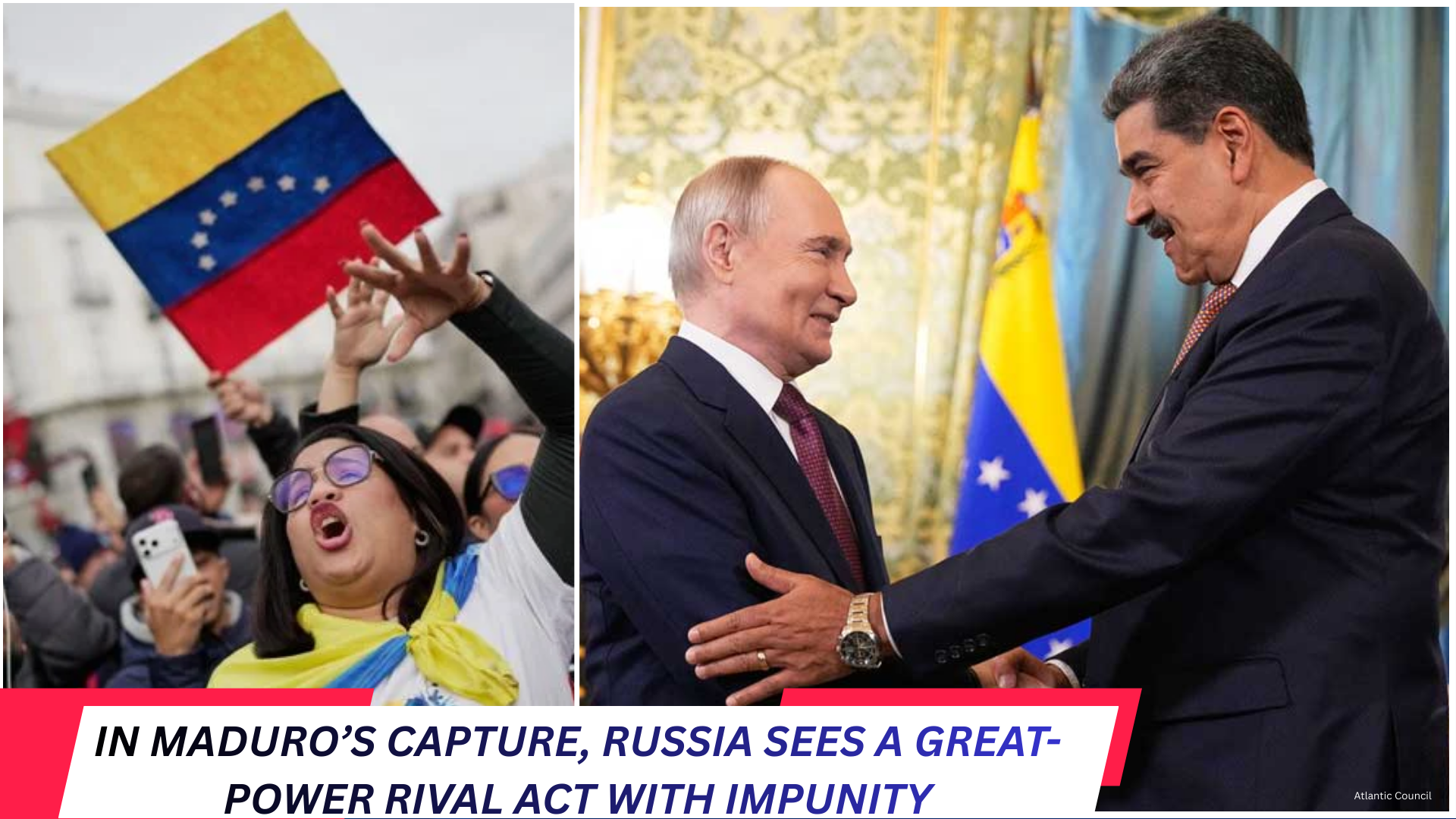
Major global powers also weighed in with concern. China and Russia sharply criticized the strikes, describing them as unlawful and destabilizing. Both warned that the precedent of using military force to capture a foreign head of state could erode international law and increase the risk of confrontation between major powers. European governments, while more restrained in their language, called for de-escalation, due process, and respect for established legal frameworks.
Behind the public statements, diplomats say there is widespread unease. Many leaders fear that the operation blurs the line between criminal justice and regime change, creating uncertainty about how similar actions might be justified in the future. Smaller states, in particular, worry about what protections remain if powerful nations decide that indictments or security concerns warrant unilateral force.
International law experts note that the strikes sit in a gray area. The United Nations Charter generally prohibits the use of force inside another sovereign state except in cases of self-defense or with international authorization. The U.S. argument rests on the claim that Maduro’s alleged activities constituted an ongoing threat and that existing indictments justified enforcement once he was taken into custody. Critics counter that this rationale stretches legal definitions and risks weakening the rules meant to restrain military power.
The reaction also reflects differing views on the role of the United States in a changing world. Supporters see decisive action as evidence that American leadership still matters and that failure to act can allow criminal networks and authoritarian governance to persist. Critics argue that strength without restraint can undermine the very order the United States claims to defend, especially if actions appear selective or unilateral.
Within Venezuela, the strikes and Maduro’s capture have created uncertainty rather than immediate clarity. Competing claims of authority have emerged, and the country’s fragile institutions remain under strain. Neighboring states are watching closely, concerned about refugee flows, economic disruption, and the potential for instability to spill across borders.
For the Trump administration, the challenge now extends beyond the operation itself. Managing the legal process in U.S. courts, clarifying the scope and duration of American involvement, and reassuring allies and partners will require careful coordination. Statements suggesting temporary U.S. oversight of Venezuela have added to global anxiety, even among governments inclined to see Maduro removed.
The episode underscores a central tension in modern geopolitics: how to respond when allegations of criminal conduct intersect with state sovereignty. The mixed global reaction — praise from some, anger from others, and fear among many — reflects not just views on Venezuela, but deeper uncertainty about the rules that govern international conduct.
As the immediate military phase gives way to diplomacy and legal proceedings, world leaders will be watching closely. The long-term consequences of the U.S. action will depend less on the operation’s tactical success than on whether it reinforces stability and accountability, or accelerates erosion of the norms that have shaped global order for decades.