%20(4).png)


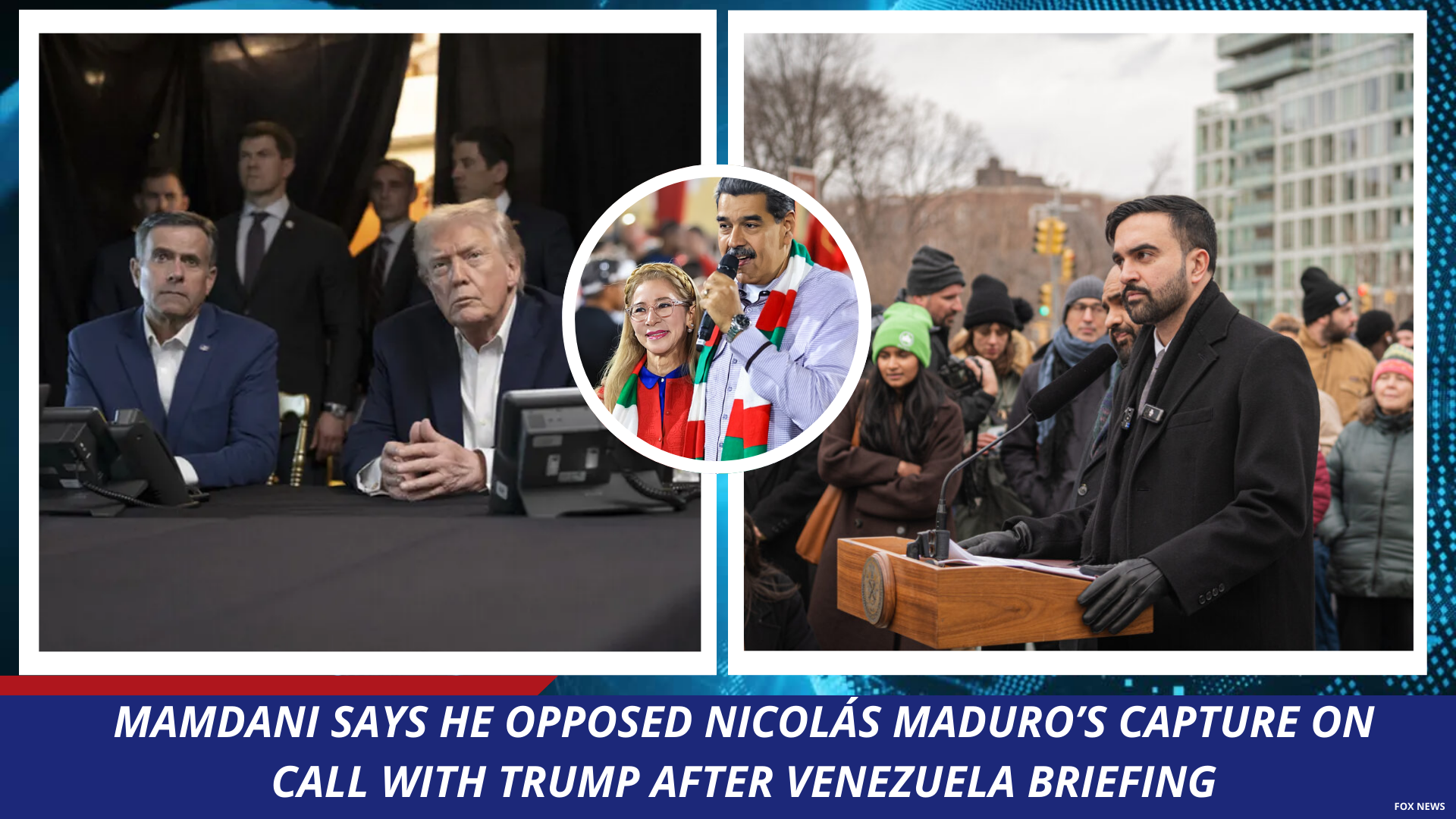


New York City Mayor Zohran Mamdani says he spoke directly with President Donald Trump to express his opposition to the U.S. operation that led to the capture of Venezuelan President Nicolás Maduro. The call followed a briefing on the situation in Venezuela and came as Maduro was transferred to the United States to face federal criminal charges related to narcotics trafficking and terrorism.
Mamdani said his objection was not a defense of Maduro’s record in office, which has been widely criticized for corruption, repression, and economic mismanagement. Instead, he framed his concerns around the method used by the United States, arguing that the use of military force to seize a foreign head of state raises serious legal and ethical questions. In public remarks, Mamdani described the operation as crossing a line from law enforcement into de facto regime change.
According to Mamdani, he told the president that such actions risk undermining international law and setting a precedent that could be used by other powers to justify similar interventions. He also warned that instability in Venezuela could have direct consequences for Venezuelan communities abroad, including those living in New York City, through economic disruption, migration pressures, and heightened political tensions.
The White House has acknowledged that the president spoke with Mamdani but has stood firmly behind the operation. Administration officials argue that the action was grounded in long-standing federal indictments against Maduro and was carried out to enforce U.S. law after years of diplomatic and economic measures failed to produce accountability. They maintain that the allegations against Maduro involve direct harm to U.S. interests through large-scale drug trafficking and cooperation with armed groups.
Mamdani’s comments place him among a smaller but vocal group of U.S. officials questioning the scope of presidential authority in this case. While some lawmakers have praised the administration for acting decisively, others have urged caution, arguing that combining military action with criminal prosecution blurs important distinctions in U.S. foreign policy and risks drawing the country into prolonged instability.
The debate reflects a broader tension in American statecraft: how to balance enforcement of the law with respect for sovereignty and international norms. Supporters of the administration say failing to act would have reinforced impunity for powerful figures accused of serious crimes. Critics counter that the manner of action matters as much as the intent, particularly when it involves the removal of a foreign leader by force.
For Mamdani, the issue also carries a local dimension. He has said his priority is ensuring the safety and stability of New York’s diverse communities amid heightened global tensions. While his opposition is unlikely to alter the administration’s course, it highlights the extent to which the Venezuela operation has reverberated beyond foreign policy circles and into domestic political debate.
As Maduro’s case proceeds through the federal courts, scrutiny will continue not only of the evidence against him, but also of the decision-making process that led to his capture. The exchange between Mamdani and the president underscores a central reality of the moment: even when the United States acts with confidence abroad, questions of power, precedent, and restraint remain unsettled at home.