%20(4).png)


.png)


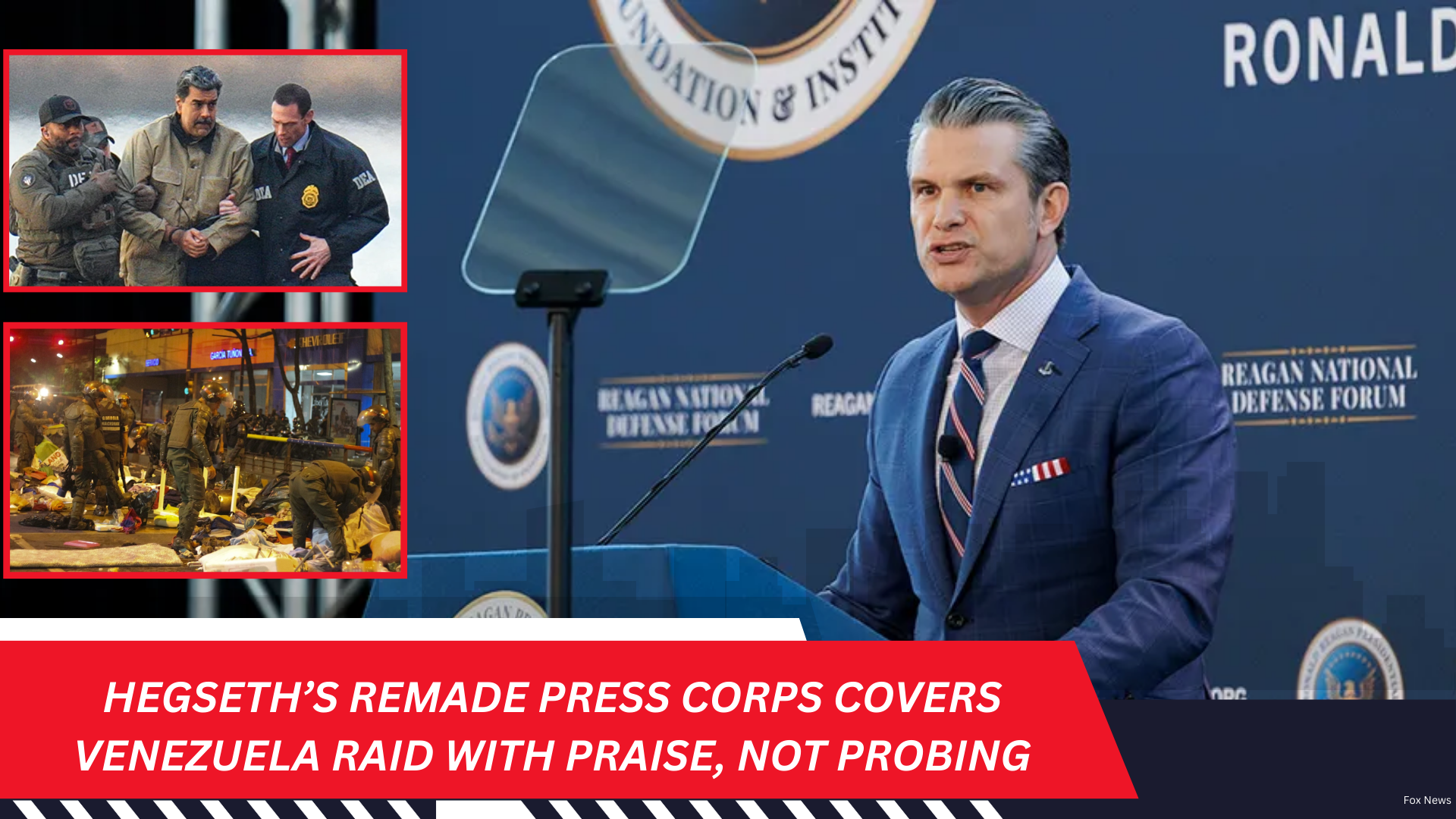
Senior U.S. officials moved on Sunday to clarify the administration’s position following President Donald Trump’s statement that the United States would “run” Venezuela for the time being after the reported capture of Nicolás Maduro. Speaking publicly, Defense Secretary Pete Hegseth said the president would determine the scope and duration of U.S. involvement, stressing that the operation was guided by clear objectives and centralized authority.
Hegseth’s remarks came amid growing international and domestic scrutiny over what, precisely, American oversight of Venezuela would entail. He described the situation as temporary and conditional, arguing that President Trump had established firm terms focused on stability, security, and enforcement of U.S. law. According to Hegseth, the administration’s intent is not open-ended occupation but a controlled transition designed to prevent disorder and protect U.S. interests in the region.
Administration officials have consistently framed the operation as a law enforcement action supported by military force, rooted in longstanding federal indictments against Maduro for narcotics trafficking and related crimes. Hegseth reiterated that point, saying the president’s authority rests on enforcing those charges and addressing what the administration describes as a persistent security threat emanating from Venezuela. At the same time, Trump’s language about “running the country” has fueled concerns that the United States is assuming responsibilities that go beyond arrest and detention.
Asked about those concerns, Hegseth emphasized command clarity. “The president sets the terms,” he said, underscoring that decisions about governance, duration, and exit strategy would be made at the highest level. He added that U.S. forces are operating under strict rules intended to limit engagement and avoid unnecessary escalation. The message, officials say, is one of discipline and control rather than improvisation.
Critics remain unconvinced. Some lawmakers and legal scholars argue that any claim of temporary governance risks crossing a line under international law, particularly absent congressional authorization or multilateral backing. They warn that even limited oversight can quickly expand, especially in a country with fragile institutions and deep political divisions. The administration counters that uncertainty itself poses risks, and that firm direction is necessary to prevent a power vacuum.
International reaction has been cautious to critical. Several governments have emphasized sovereignty and called for a rapid return to Venezuelan self-rule. Others have acknowledged concerns about Maduro’s record while questioning the precedent set by unilateral action. Hegseth responded by noting that the administration is engaged in ongoing consultations with regional partners and that stability in the Western Hemisphere remains a shared interest.
Economic considerations also hover in the background. President Trump has suggested that U.S. involvement could extend to reviving Venezuela’s oil industry, a prospect that raises questions about the blending of security, governance, and commercial interests. Hegseth avoided specifics on energy policy, saying only that any economic decisions would follow, not precede, stabilization.
For now, the administration is seeking to project resolve and coherence. By placing decision-making authority squarely with the president, Hegseth’s remarks aim to reassure supporters that the operation is deliberate and critics that it is bounded. Whether that assurance holds will depend on developments on the ground and the administration’s ability to translate strong words into a limited, credible plan.