%20(4).png)


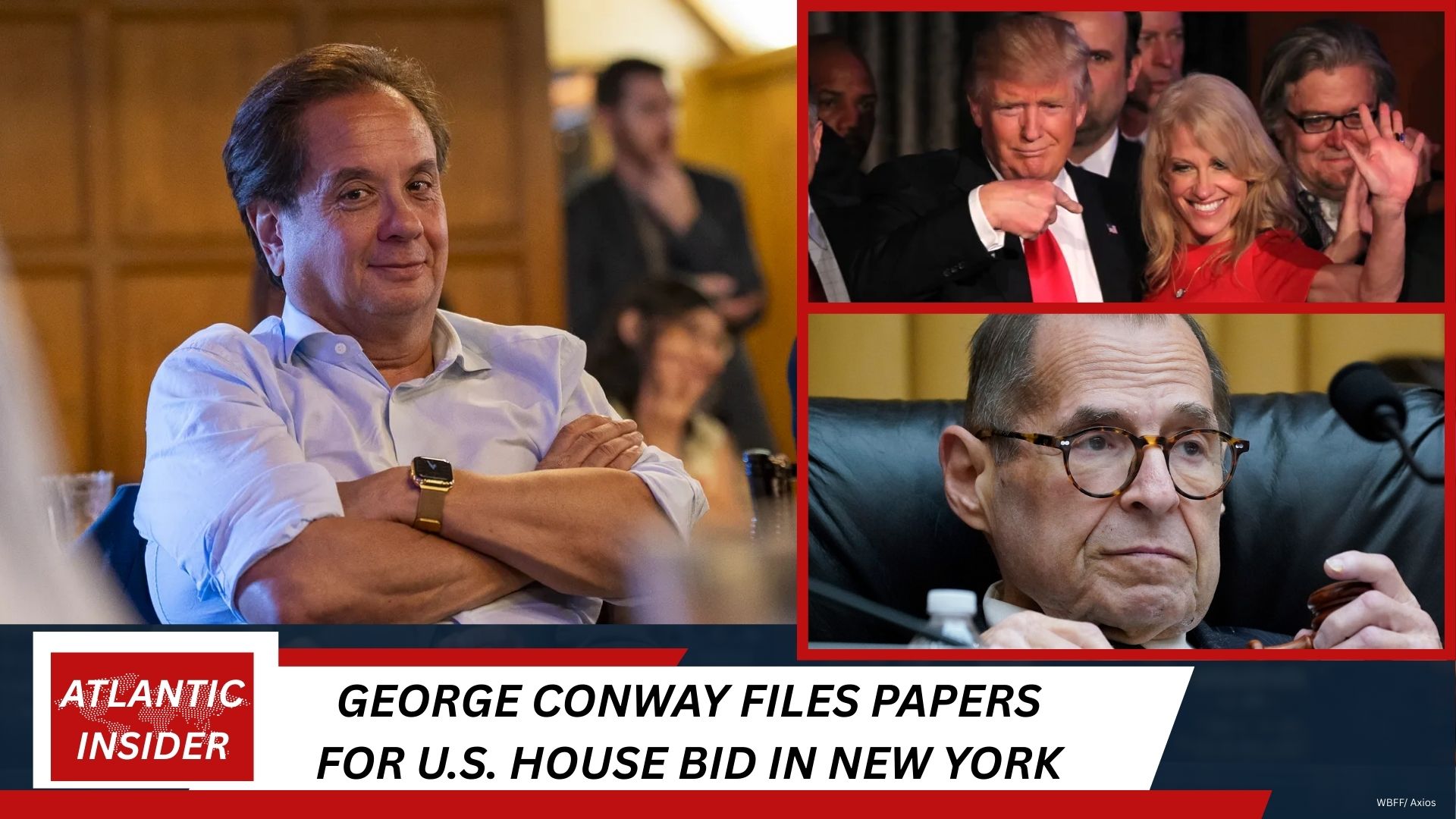


Washington/New York — George Conway, the lawyer widely known for his sharp criticism of former President Donald Trump, has filed paperwork to run for the U.S. House of Representatives in New York’s 12th Congressional District. The move marks Conway’s first run for elected office and places a nationally recognized political figure into a crowded Democratic primary for one of Manhattan’s most prominent congressional seats.
Conway’s filing with the Federal Election Commission formally establishes his candidacy and allows him to begin fundraising and organizing ahead of the 2026 election cycle. While he has not yet held a full campaign launch event, the paperwork signals a clear intention to compete seriously for the seat, which is being vacated by longtime Representative Jerry Nadler, who announced he will not seek reelection after decades in Congress.
The district Conway is seeking to represent includes large portions of Manhattan’s Upper East Side, Upper West Side, and Midtown. It is among the most reliably Democratic districts in the country, meaning the primary election is widely expected to determine the eventual winner. As a result, the Democratic contest has attracted a wide range of candidates, including state legislators, local officials, activists, and figures with prominent family or institutional ties.
Conway’s entry stands out because of his unusual political journey. Earlier in his career, he was aligned with conservative legal circles and Republican politics. That background contrasts sharply with his more recent public role as one of Trump’s most outspoken and persistent critics. During Trump’s presidency and in the years that followed, Conway became a familiar presence in national media, offering legal analysis and warning about what he described as threats to constitutional norms.
His public break with Trump was particularly notable given his former marriage to Kellyanne Conway, who served as a senior adviser in the Trump White House. The contrast between their public roles made Conway a symbol, for some observers, of the broader rupture within the Republican Party during the Trump era. Over time, Conway’s political identity shifted further, culminating in his decision to run as a Democrat.
That evolution will likely be both an asset and a challenge. Supporters may view Conway as a credible, articulate defender of democratic institutions with a strong legal background. His critics, including some within the Democratic Party, may question whether his political transformation reflects deeply held convictions or a reaction to Trump himself rather than a broader alignment with Democratic priorities.
The race Conway is entering is expected to focus heavily on local issues, even as national politics loom large. Housing affordability, public transportation, healthcare access, education, and quality-of-life concerns are perennial issues in Manhattan politics. Successful candidates in the district have typically combined progressive policy positions with deep engagement in neighborhood-level concerns.
Conway’s public profile, shaped largely by national debate, leaves open questions about how he will connect with voters on these local issues. While his legal expertise and national visibility may resonate with voters who see the election as part of a broader struggle over the direction of the country, primary voters in New York City often place a premium on local experience and community ties.
The timing of Conway’s filing gives him an organizational head start. Establishing a campaign early allows candidates to build donor networks, hire staff, and develop messaging well before the primary election. In a crowded field, early organization can be an advantage, though it does not guarantee success in a district where retail politics and coalition-building remain important.
Political analysts note that Conway’s candidacy reflects a broader trend of high-profile commentators and legal figures stepping into electoral politics. The move from analysis to advocacy, and then to candidacy, carries risks. Campaigns demand different skills than public commentary, including coalition-building, fundraising discipline, and sustained engagement with voters on a wide range of practical issues.
For Conway, the challenge will be defining a campaign that is about more than opposition to Trump. While his criticism of the former president brought him prominence, Democratic primary voters are likely to look for clear positions on economic policy, social services, public safety, and the role of government in daily life. How Conway articulates those positions will shape perceptions of his readiness to serve in Congress.
At the same time, his candidacy underscores the enduring influence of Trump-era politics, even in districts far removed from the former president’s base. For some voters, Conway’s outspoken stance may serve as a credential, signaling vigilance toward institutional norms and the rule of law. For others, it may raise questions about whether national political battles are overshadowing local needs.
As the primary campaign develops, Conway is expected to roll out a formal announcement, policy platform, and schedule of public appearances. Debates and forums will offer opportunities for voters to assess how he compares with rivals who bring different experiences and priorities to the race.
The contest for New York’s 12th District is likely to be closely watched, both because of the district’s prominence and because of the unusual profile of some of the candidates involved. For Conway, the campaign represents a decisive step from critic to participant in the political system he has spent years analyzing.
Whether Democratic voters embrace that transition will be determined in the months ahead.