%20(4).png)


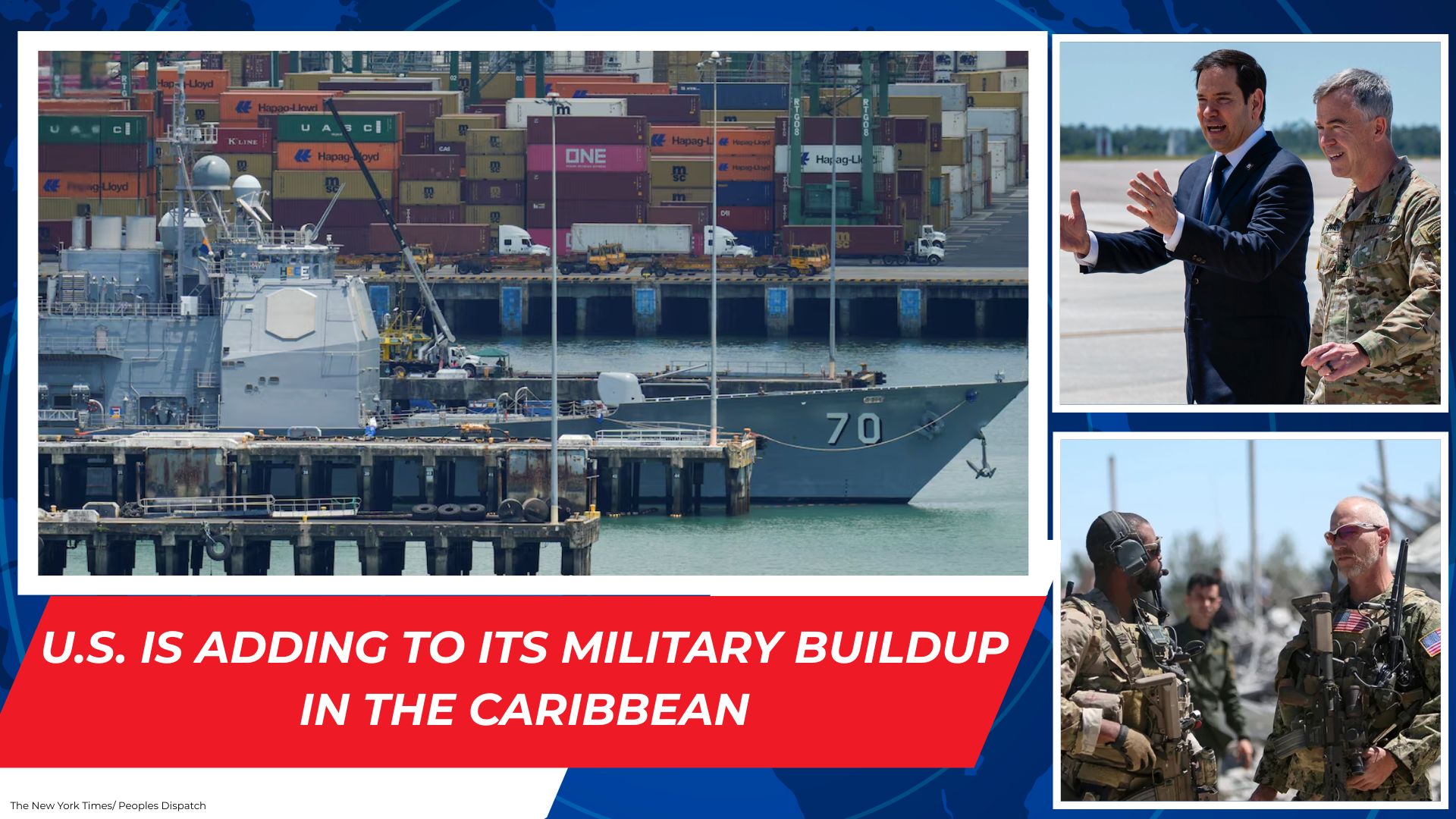


The United States is significantly expanding its military presence in the Caribbean region, marking one of the largest strategic deployments in decades as tensions rise with Venezuela and Washington intensifies operations under the banner of counter-narcotics and regional security. Over recent months, multiple deployments of troops, aircraft, naval assets, and logistical support have converged in the region, transforming parts of the Caribbean into a focal point of U.S. military posture in the Western Hemisphere.
The buildup represents a broad escalation beyond routine operations aimed at combating drug trafficking. What began as a mission to interdict vessels believed to be linked to drug cartels has grown into a comprehensive forward presence that includes strike aircraft, advanced fighter jets, special operations forces, and a carrier strike group positioned closely to Venezuelan waters.
A key recent development has been the dispatch of heavy transport and cargo aircraft, such as C-17 Globemaster III planes, ferrying troops and equipment to strategic hubs like Puerto Rico, a U.S. territory that lies north of Venezuela. These flights indicate an uptick in logistical movements, suggesting an acceleration in force posture and preparations in the theater. This expanded footprint has raised questions about U.S. intentions and the scale of its military ambitions in the region.
One of the most visible elements of the U.S. buildup is the presence of the USS Gerald R. Ford aircraft carrier strike group and a constellation of support vessels, including guided-missile destroyers and amphibious ships. The carrier’s deployment adds significant naval firepower and air capability to the Caribbean, enhancing the U.S. Navy’s reach for sustained maritime operations. This buildup, described as the largest aggregation of American firepower in the region in generations, is part of what U.S. commanders frame as a mission to protect regional security and deter threats that span drug trafficking, narco-terrorism, and broader instability.
Beyond the carrier, the air dimension of the buildup has seen dramatic expansion. Stealth fighters like F-35 Lightning II jets, including both Air Force and Marine Corps variants, are now deployed in numbers rarely seen in the region, with some stationed at former Cold War bases such as the reopened Roosevelt Roads Naval Station in Puerto Rico. Electronic warfare platforms, aerial refueling tankers, reconnaissance aircraft, and special operations support planes have also arrived, significantly boosting U.S. theater mobility and combat readiness.
The U.S. Air Force and special operations units have been conducting persistent over-theater sorties. These include unmanned MQ-9 Reaper drones, intelligence and reconnaissance aircraft, and tactical support assets that extend the U.S.’s ability to monitor sea and airspace around Venezuela and adjacent territories. Forward basing agreements with regional partners such as Trinidad and Tobago, which has opened its airports to U.S. aircraft operations, further enhance operational flexibility and logistical depth for American forces.
The buildup is part of a broader campaign initially focused on anti-drug trafficking but now seen by many analysts as part of a growing pressure campaign against the Venezuelan government. Since early September 2025, the U.S. military has conducted air and maritime strikes on vessels in the Caribbean that it characterizes as narco-trafficking threats, resulting in significant casualties and drawing international attention to the force’s assertive posture.
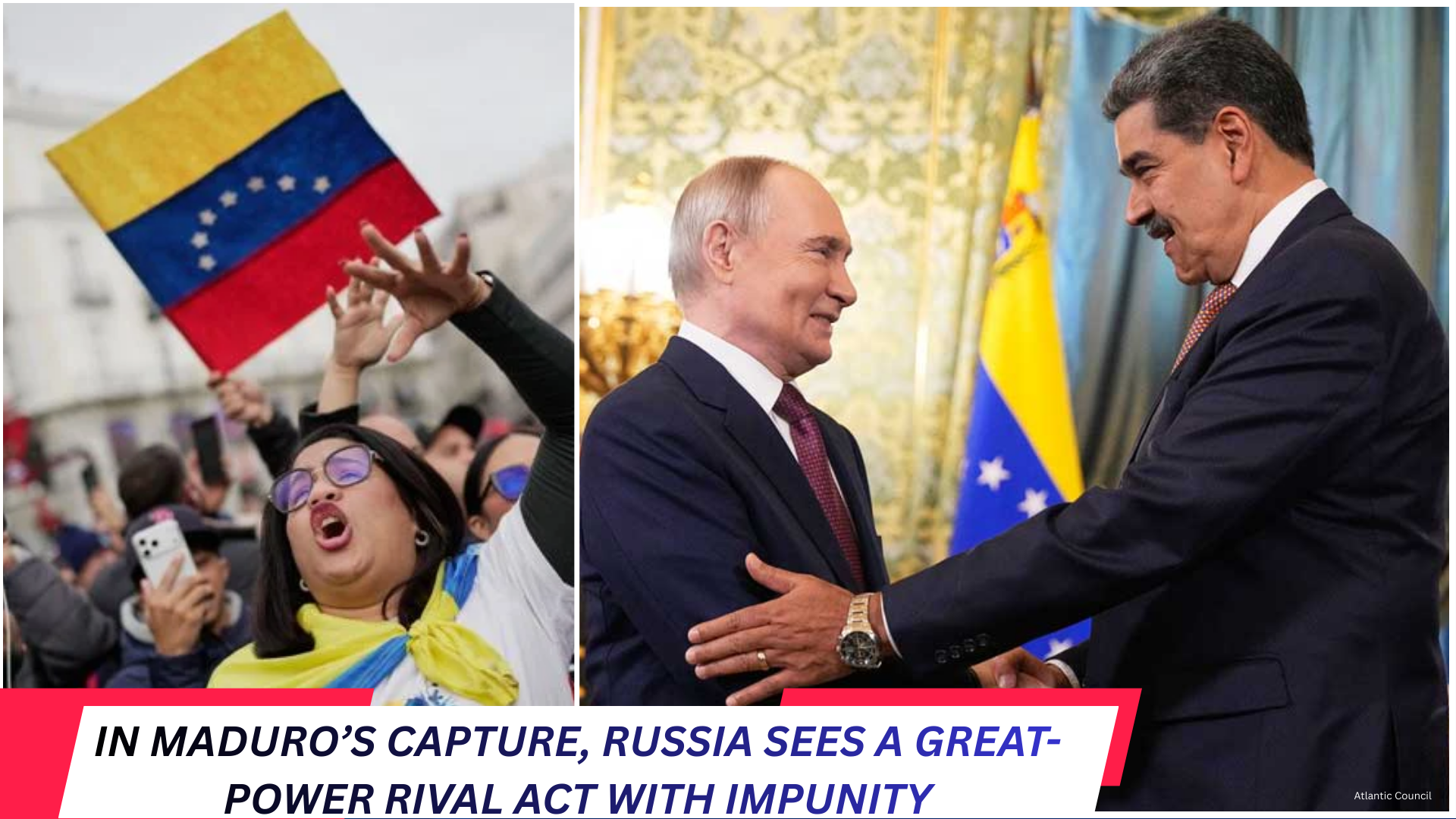
While U.S. leaders maintain that the buildup is justified by the need to counter transnational criminal networks and protect hemispheric security, it has triggered sharp reactions from other governments. Venezuela, led by President Nicolás Maduro, vehemently condemns the presence of U.S. warships and aircraft near its borders, viewing the buildup as an aggressive threat to its sovereignty and a precursor to possible military intervention. Caracas has mobilized its own forces and undertaken military exercises in response, underscoring the potential for dangerous escalation.
The deployment also has broader geopolitical implications. Russia and China have criticized the U.S. escalation, arguing that it undermines regional stability and sets a precedent for interventionist policies in the Americas. They have urged restraint and called for diplomatic solutions to the underlying tensions, particularly between Washington and Caracas.
Despite these controversies, U.S. officials and military leaders emphasize that their presence is meant to reinforce deterrence, safeguard maritime security, and uphold international norms against smuggling and violence at sea. They argue that enhanced capabilities in the Caribbean provide the U.S. with a rapid response option should conditions deteriorate or threats materialize.
For regional neighbors, the buildup has elicited mixed reactions. Some nations, like Trinidad and Tobago, have cooperated with U.S. forces on logistical grounds, while others express concern about escalating military tensions close to their shores. The dynamic underscores the delicate balance that Caribbean and Latin American states must navigate between security cooperation and regional autonomy.
As the U.S. continues to fortify its military posture in the Caribbean, the situation remains fluid and sensitive. The buildup, driven by a blend of anti-drug, strategic deterrence, and political objectives, reflects deepening security challenges in the Western Hemisphere and highlights how rapidly regional military dynamics can shift in response to broader geopolitical pressures.