%20(4).png)


.png)


Greenland’s prime minister Jens‑Frederik Nielsen has issued a clear and unequivocal statement rejecting remarks by U.S. President Donald Trump suggesting that the United States might pursue annexation of the Arctic territory. Nielsen’s comments, delivered with measured gravity, underscore that Greenland’s political future rests firmly with its people and the Kingdom of Denmark, not with external powers. The episode has amplified existing concerns in Copenhagen, Nuuk, and allied capitals about the durability of transatlantic trust and the importance of respecting sovereignty in regions of strategic interest.
The context for Nielsen’s warning is both immediate and historical. While the United States and Denmark maintain close defense and economic ties, Greenland occupies a unique position in the Arctic. Its vast territory, strategic location, and natural resources make it a focal point for security planners and resource strategists alike. During the Cold War, Greenland hosted critical U.S. bases for early warning systems, and its strategic relevance has only increased in recent years as Arctic ice recedes and new shipping routes and resource opportunities emerge. Within NATO, Greenland’s role is integral, providing both geographic coverage and infrastructure critical to alliance defense.
President Trump’s recent public comments about Greenland’s strategic importance, and suggestions that the United States could have a direct interest in its future, prompted concern in both Danish and international circles. While the comments did not amount to formal policy, they touched a sensitive chord in Nuuk and Copenhagen. Greenland’s autonomy, established through decades of constitutional and administrative evolution, allows local leaders significant authority over domestic policy, while Denmark maintains responsibility for defense and foreign relations. Any suggestion that sovereignty could be overridden by outside powers was, therefore, met with firm resistance.
In a public address, Nielsen said that the United States should abandon “fantasies about annexation,” and that any discussion regarding Greenland’s future must proceed through proper diplomatic channels. The statement emphasized that Greenlanders, together with Denmark, determine the island’s political trajectory and that foreign powers cannot impose unilateral decisions. By framing the issue in both legal and political terms, Nielsen highlighted the importance of international law, bilateral agreements, and mutual respect in managing relations between small territories and global powers.
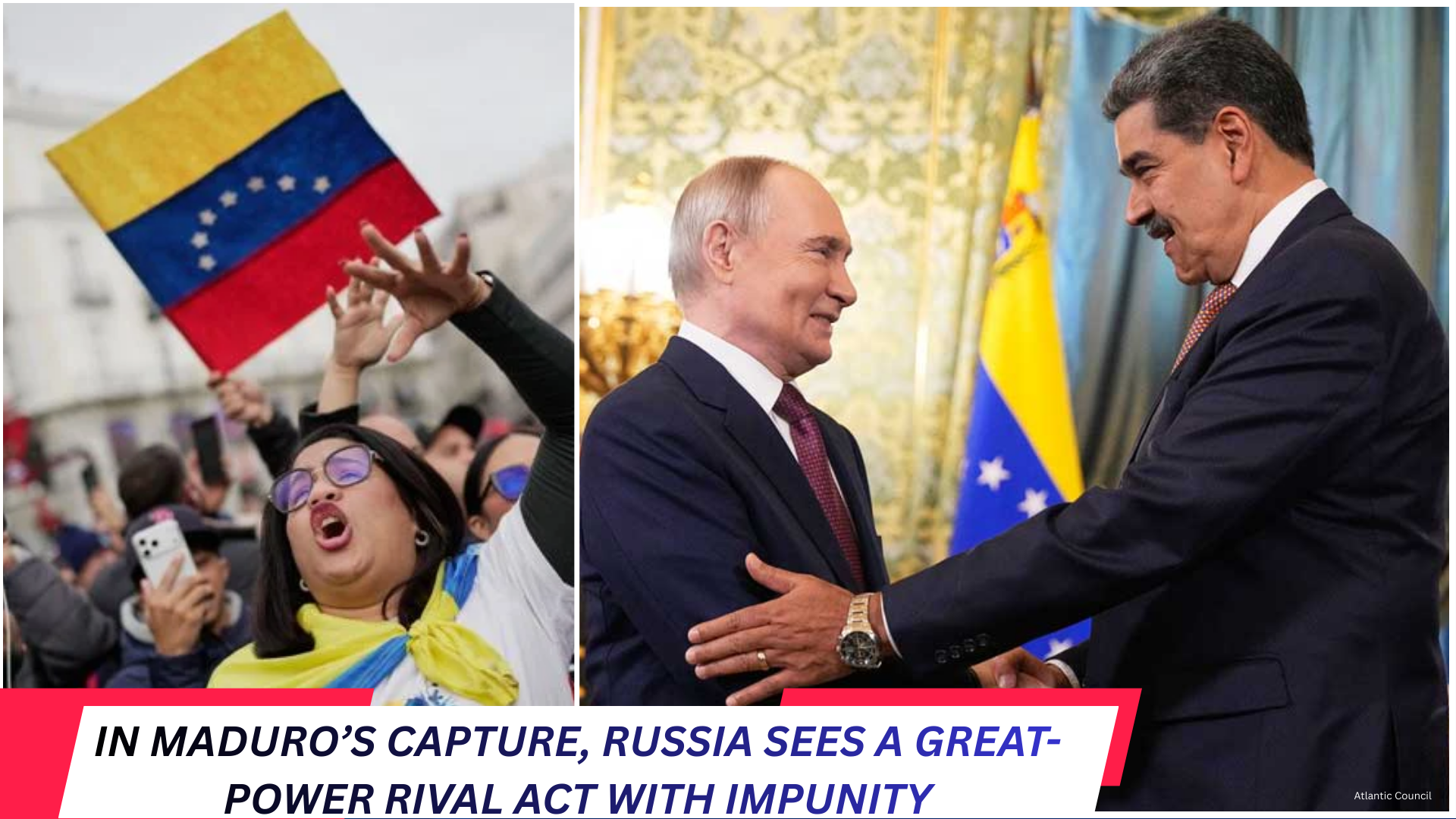
The prime minister’s comments were also influenced by broader geopolitical developments. The recent U.S. military operation in Venezuela, which resulted in the capture of Nicolás Maduro, has heightened concerns in European capitals and smaller states about the scope of American action and the implications for regional stability. While the Venezuela operation targeted a leader facing long-standing criminal charges, its unilateral nature raised alarms among allies regarding the potential precedent for action against other sovereign states. For Greenland and Denmark, the lesson was clear: assurances of security and alliance solidarity must be matched by respect for legal and political boundaries.
Denmark’s prime minister reinforced Nielsen’s message, warning that any coercive actions against Greenland could threaten the cohesion of NATO itself. Article 5 of the alliance, the mutual defense clause, is predicated not only on protection from external threats but also on trust that members do not use force against one another. Even rhetorical threats, leaders warned, can erode that trust. If Greenland were treated as a territory to be seized or coerced, it could set a precedent that destabilizes transatlantic security arrangements.
Allied governments in Europe, while careful not to escalate the rhetoric, voiced similar concerns. Leaders emphasized that Greenland’s future must be determined internally and that strategic partnerships rely on respecting sovereignty and established norms. The episode illustrates a central challenge of modern geopolitics: strategic competition in the Arctic and elsewhere increasingly tests the limits of alliance cohesion, requiring powers to balance national interest with the expectations and rights of smaller partners.
The episode also reflects domestic politics in Greenland. The island has a growing sense of political identity and a history of asserting autonomy in both economic and social affairs. While cooperation with the United States on defense, research, and investment remains valuable, local leaders insist that strategic cooperation does not entail ceding sovereignty. Nielsen’s statements are therefore as much about domestic signaling as they are about international diplomacy: Greenland will engage with partners, but it will not be treated as a pawn in a larger geopolitical game.
Observers note that the situation exemplifies a broader tension in U.S. foreign policy. American power remains decisive, but its exercise increasingly interacts with alliances, treaties, and legal frameworks that constrain action. Decisions in strategic areas like the Arctic cannot be made in isolation without consideration of legal obligations, domestic legitimacy, and alliance cohesion. The Greenland episode is a reminder that even rhetoric carries consequences when it challenges sovereignty and established norms.
In practical terms, the prime minister’s message is also a call for clarity. The Arctic is gaining attention as a region of economic and military interest. Shipping routes are opening, resource extraction is expanding, and Russia and China are actively engaged. Greenland, with its unique position and infrastructure, will remain central to these dynamics. Diplomacy that respects local decision-making, rather than imposing unilateral plans, will be essential to maintaining stability and cooperation.
For the United States, the lesson is one of calibration. Assertiveness can be effective, but it must be coupled with respect for alliances and legal norms. Unchecked rhetoric or perceived overreach risks undermining long-term relationships, complicating cooperation on issues ranging from defense to scientific research. Denmark and Greenland’s firm stance signals that allies expect predictability and restraint, not surprises or threats, when dealing with strategically sensitive territories.
The episode also underscores the importance of international law as a stabilizing framework. Greenland’s autonomy is enshrined in agreements recognized by the United Nations and respected by NATO partners. Any challenge to that status, even in rhetorical form, raises questions not just of principle, but of credibility and legitimacy. Smaller states and territories watch such signals closely, understanding that norms protect them in an environment dominated by larger powers.
In the months ahead, Greenland and Denmark are likely to continue asserting their position while maintaining constructive ties with Washington. Cooperation on defense, Arctic security, and research will remain essential, but the boundaries of authority are now more explicitly stated. For U.S. policymakers, the episode serves as a reminder that power is most effective when exercised in concert with allies, not in ways that provoke uncertainty or alarm.
Ultimately, the Greenland episode illustrates the delicate interplay between strategic ambition and respect for sovereignty. It demonstrates that even the world’s most powerful nations must account for legal, institutional, and domestic constraints when pursuing objectives in sensitive regions. Greenland’s leadership has sent a clear message: strategic cooperation is welcome, unilateral claims are not, and the island’s future will be determined by its people within the framework of law and partnership.